To Become in Spanish: Ponerse, Volverse and Convertirse en (A2 Level)
Did you know that in Spanish, we don’t use just one verb to say ‘to become’?
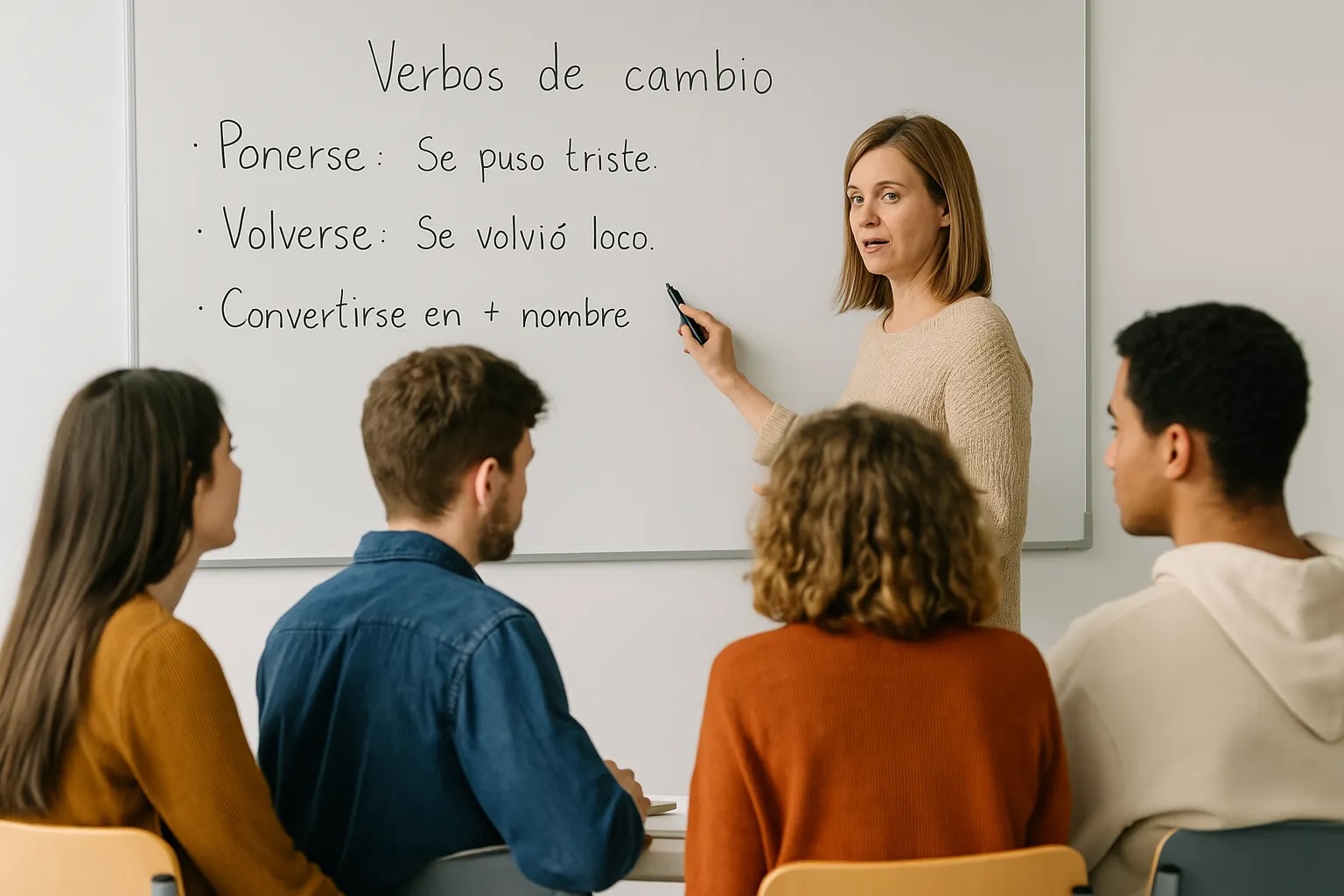
Depending on the type of change, Spanish speakers use three different verbs:
👉 ponerse, volverse, and convertirse en.
In this guide, you’ll learn how to use each of them correctly with practical examples.
1. PONERSE + adjective
🟡 Type of change: emotional or physical (temporary)
📌 Example:
Me pongo nervioso.
→ I become nervous.
Used for moods, health, colors. It’s a quick and spontaneous change.
2. VOLVERSE + adjective
🟠 Type of change: personality or attitude (long-lasting)
📌 Example:
Se ha vuelto muy serio.
→ He became very serious.
Used when someone’s character or behavior changes over time, often unintentionally.
3. CONVERTIRSE EN + noun
🔴 Type of change: total transformation or identity
📌 Example:
Se convirtió en artista.
→ He became an artist.
Used for professions, identity changes, or symbolic transformations.
How to express change accurately in Spanish (A2 Level)
Spanish Verb | Type of Change | Example (ES) | Translation (EN) |
Ponerse | Emotional/Physical (temporary) | Me pongo nervioso. | I become nervous. |
Volverse | Character/Attitude (lasting) | Se ha vuelto muy serio. | He became very serious. |
Convertirse en | Total transformation | Se convirtió en artista. | He became an artist. |
One verb in English, three in Spanish: learn the difference
In English, ‘to become’ works for many situations. But in Spanish, choosing the right verb helps you express yourself with precision and sound more natural. Knowing when to use ponerse, volverse, or convertirse en is a key step for A2 learners.
Want to improve your Spanish faster?
Understanding Spanish verb tenses becomes much easier when you practise them in real conversations.
At Giralda In&Out Spanish School in Seville, our small group courses help students practise grammar in real-life communication.